(+34) 930357278

loud@loudbarcelona.com

How Well Do Consumers Remember Logos?

Jan 20, 2026

Learn the difference between logo recognition and logo recall, and discover the key branding principles that make logos memorable and strengthen long-term brand recall.

logotypes
logotypes

How Well Do Consumers Remember Logos?

Jan 20, 2026

Learn the difference between logo recognition and logo recall, and discover the key branding principles that make logos memorable and strengthen long-term brand recall.

logotypes

We see logos every day, on apps, packaging, ads, and social media. But how well do we really remember them?

Several studies reveal a surprising truth: even the world’s most famous logos are often poorly recalled from memory. People recognize them instantly, yet struggle to reproduce or describe them accurately. This gap offers valuable insights for brands looking to build stronger, more memorable visual identities.
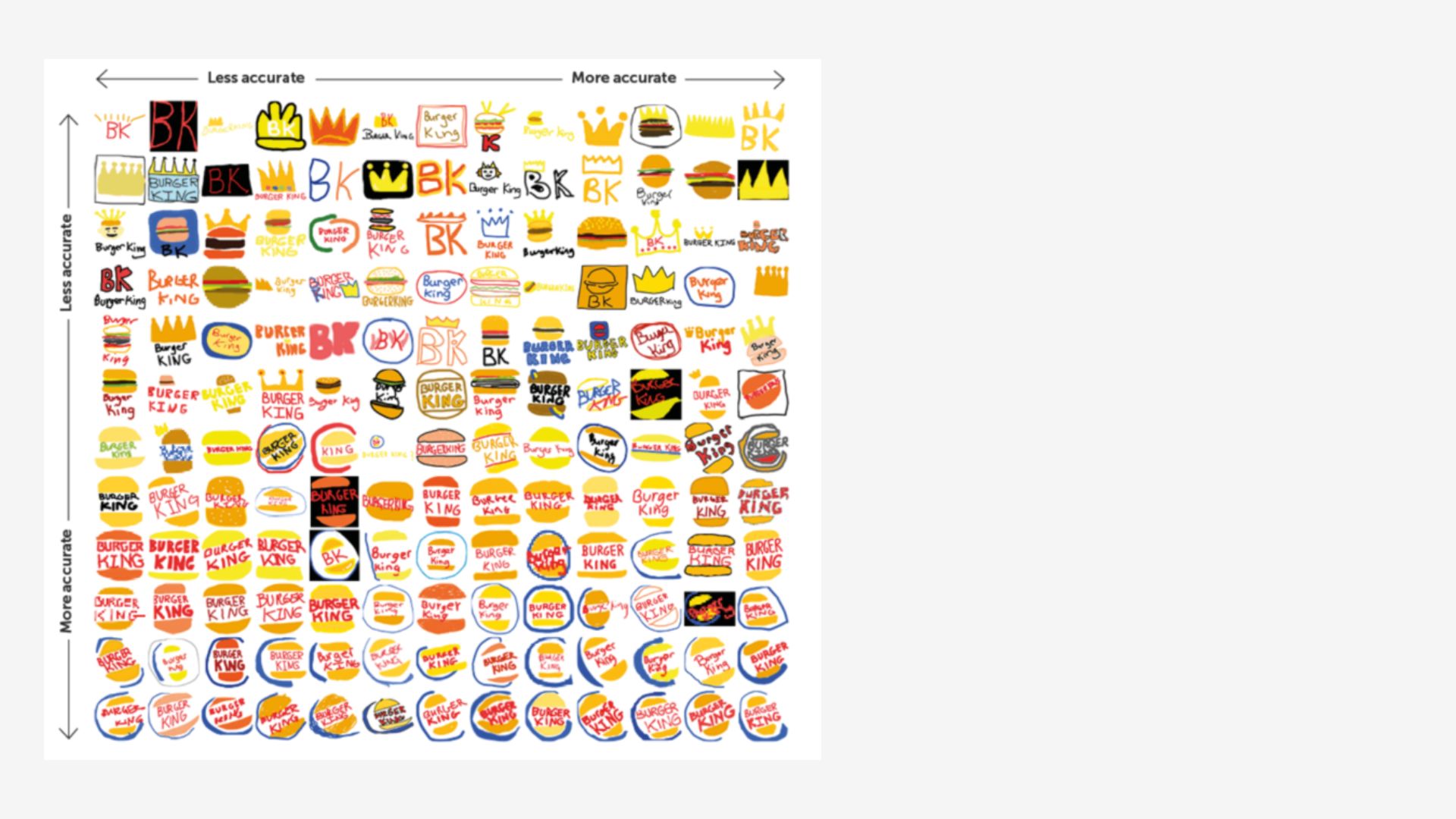
marketing logo burger king

Logo recognition vs. logo recall: What’s the difference?

One of the most important findings in logo memory research is the distinction between recognition and recall.

  • Recognition means identifying a logo when it appears in context.

  • Recall means reproducing or describing it from memory without visual help.

Most brands perform well on recognition, but far worse on recall. This suggests that consumers store general impressions of logos rather than precise details.

Your logo doesn’t need to be remembered perfectly, it needs to be instantly recognizable.

Why famous logos are harder to remember than we think

Research shows consistent patterns when people try to draw or recall logos:

  • Complex logos with many elements are recalled poorly

  • Human figures and mascots are harder to remember accurately

  • Simple geometric logos perform better, but still imperfectly

  • Colors are remembered more reliably than shapes or proportions

This confirms a key principle in branding psychology: the brain favors speed and efficiency over visual accuracy.

What makes a logo more memorable? 5 key branding principles

1. Simplicity improves brand recall

Simple logos reduce cognitive load, making them easier to process and remember. Fewer elements = stronger mental encoding. Simplicity is one of the most important logo design principles for brand recognition.

2. Distinctive shapes create mental shortcuts

Unique silhouettes or symbols help logos stand out in crowded markets and trigger faster recognition. A strong shape can work even when details are forgotten.

3. Consistent brand colors strengthen memory

Color is often the most memorable logo element. Brands that use consistent colors across all touchpoints build stronger visual associations. For example, Coca-Cola red or IKEA blue and yellow.
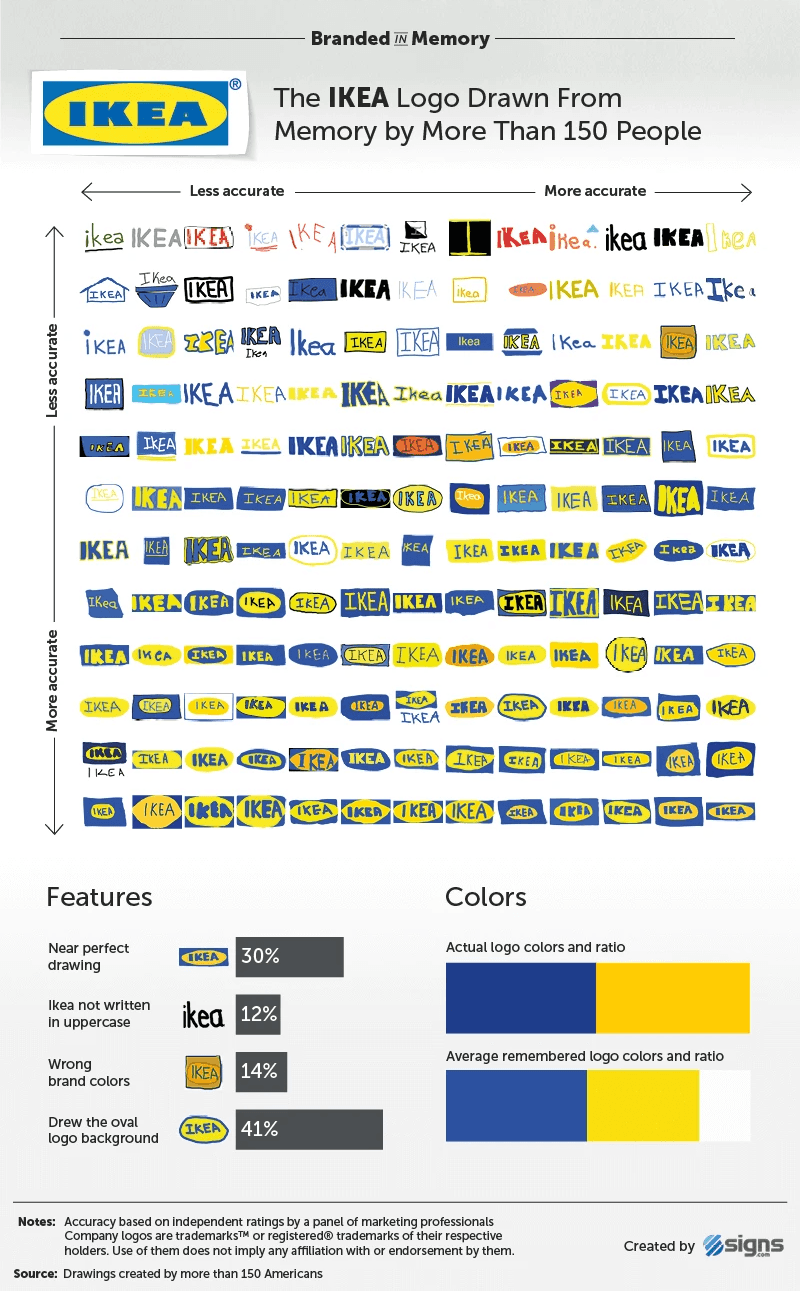
4. Emotional meaning beats visual detail

Logos connected to a clear brand story, value, or emotion are easier to remember than purely decorative designs. Meaning creates memory.

5. Versatility across digital touchpoints matters

Logos must work at small sizes (apps, favicons, social icons). Scalable, flexible designs increase exposure, and repeated exposure improves recall.

Great logos are designed for the brain, not just the eye

The best logos aren’t necessarily the most detailed or artistic, they’re the ones that align with how people actually see, process, and remember brands.

By prioritizing simplicity, consistency, and meaning, brands can create logos that don’t just look good, but work as powerful tools for long-term brand recognition and growth.

If you’re looking to build or evolve a brand that’s designed to be remembered, LOUD can help you define a clear, strategic branding system that connects design, psychology, and marketing.

We see logos every day, on apps, packaging, ads, and social media. But how well do we really remember them?

Several studies reveal a surprising truth: even the world’s most famous logos are often poorly recalled from memory. People recognize them instantly, yet struggle to reproduce or describe them accurately. This gap offers valuable insights for brands looking to build stronger, more memorable visual identities.

marketing logo burger king

Logo recognition vs. logo recall: What’s the difference?

One of the most important findings in logo memory research is the distinction between recognition and recall.

  • Recognition means identifying a logo when it appears in context.

  • Recall means reproducing or describing it from memory without visual help.

Most brands perform well on recognition, but far worse on recall. This suggests that consumers store general impressions of logos rather than precise details.

Your logo doesn’t need to be remembered perfectly, it needs to be instantly recognizable.

Why famous logos are harder to remember than we think

Research shows consistent patterns when people try to draw or recall logos:

  • Complex logos with many elements are recalled poorly

  • Human figures and mascots are harder to remember accurately

  • Simple geometric logos perform better, but still imperfectly

  • Colors are remembered more reliably than shapes or proportions

This confirms a key principle in branding psychology: the brain favors speed and efficiency over visual accuracy.

What makes a logo more memorable? 5 key branding principles

1. Simplicity improves brand recall

Simple logos reduce cognitive load, making them easier to process and remember. Fewer elements = stronger mental encoding. Simplicity is one of the most important logo design principles for brand recognition.

2. Distinctive shapes create mental shortcuts

Unique silhouettes or symbols help logos stand out in crowded markets and trigger faster recognition. A strong shape can work even when details are forgotten.

3. Consistent brand colors strengthen memory

Color is often the most memorable logo element. Brands that use consistent colors across all touchpoints build stronger visual associations. For example, Coca-Cola red or IKEA blue and yellow.

4. Emotional meaning beats visual detail

Logos connected to a clear brand story, value, or emotion are easier to remember than purely decorative designs. Meaning creates memory.

5. Versatility across digital touchpoints matters

Logos must work at small sizes (apps, favicons, social icons). Scalable, flexible designs increase exposure, and repeated exposure improves recall.

Great logos are designed for the brain, not just the eye

The best logos aren’t necessarily the most detailed or artistic, they’re the ones that align with how people actually see, process, and remember brands.

By prioritizing simplicity, consistency, and meaning, brands can create logos that don’t just look good, but work as powerful tools for long-term brand recognition and growth.

If you’re looking to build or evolve a brand that’s designed to be remembered, LOUD can help you define a clear, strategic branding system that connects design, psychology, and marketing.

Let's make some noise

Contact us if you're ready to step out of your comfort zone, refresh your brand and most importantly, if you want to be LOUD!

LOUD is the way to stand out

Amplify your success

Extreme close-up black and white photograph of a human eye

Contact us

Let's make some noise

Contact us if you're ready to step out of your comfort zone, refresh your brand and most importantly, if you want to be LOUD!

LOUD is the way to stand out

Amplify your success

Extreme close-up black and white photograph of a human eye

Contact us

Let's make some noise

Contact us if you're ready to step out of your comfort zone, refresh your brand and most importantly, if you want to be LOUD!

LOUD is the way to stand out

Amplify your success

Extreme close-up black and white photograph of a human eye

Contact us