
In 2026, running Meta Ads is no longer just about creatives and budgets. The setup behind the account now plays a major role in tracking accuracy, attribution, campaign performance, and long-term scalability.
As Meta becomes increasingly AI-driven and dependent on data quality, clean infrastructure has become essential. The brands getting the best results today usually have one thing in common: a properly organized setup behind the scenes.
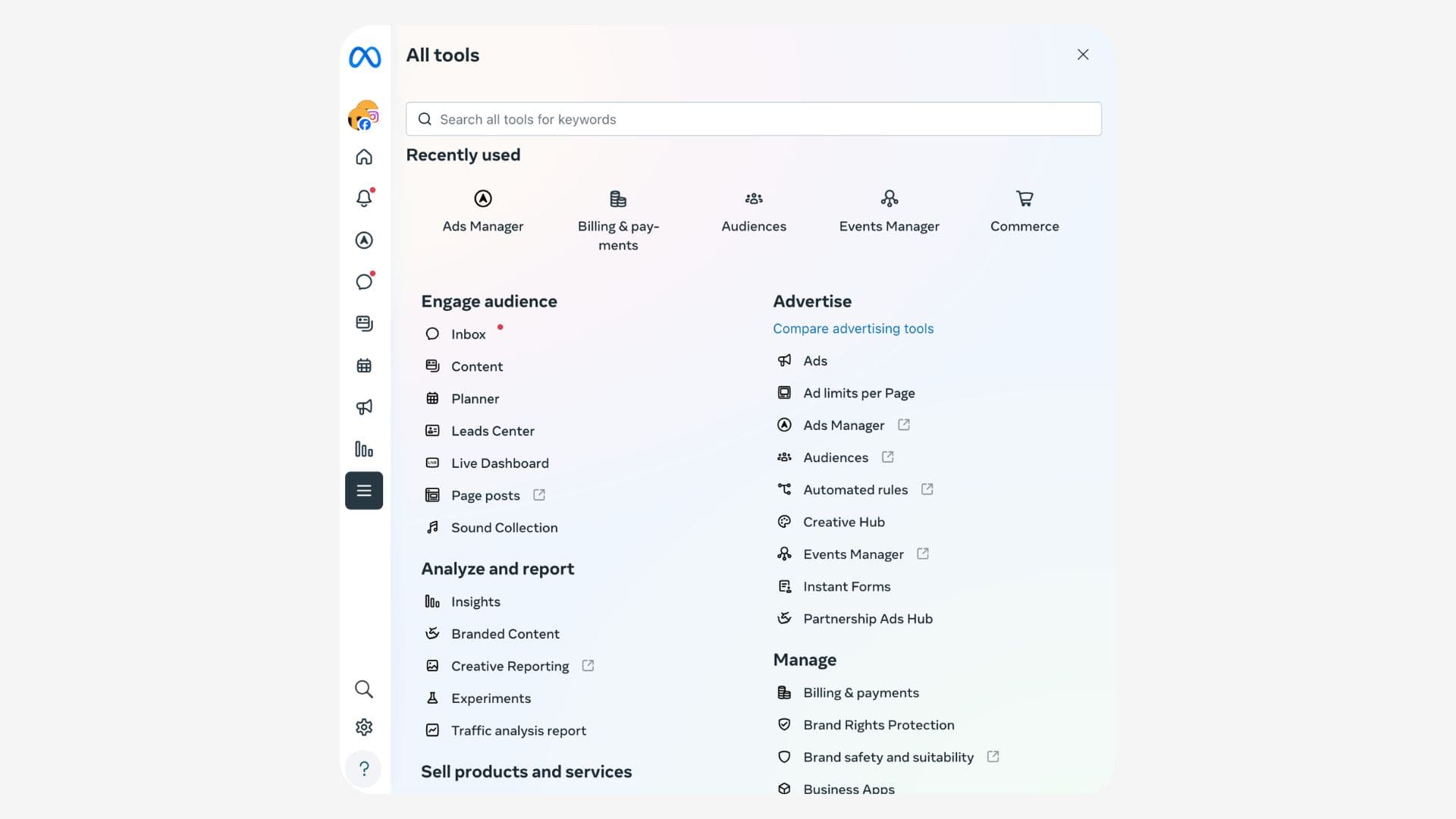
What Is Meta Business Manager?
Meta Business Manager is the central system where brands manage:
Facebook Pages
Instagram accounts
Ad accounts
Pixels and datasets
Domains
Catalogues
Users and permissions
Think of it as the operational foundation behind your Meta advertising ecosystem
What a Proper Meta Business Manager Setup Looks Like
A clean Meta setup should feel centralized, organized, and secure, while also being easy to manage and scale over time.
The goal is to create a structure that keeps all assets connected properly, simplifies collaboration between teams and agencies, and supports better tracking and campaign performance as the brand grows.
Most brands should work with:
one Business Manager
one main ad account
one main pixel/dataset
one verified domain
structured user permissions
These are some of the key elements every modern brand should have in place in 2026.
1. Keep Ownership Centralized
The business itself should own the Business Manager, ad accounts, pages, pixels, and domains. This creates long-term stability, easier collaboration, better security, and cleaner operations overall. It becomes especially important when working with agencies, freelancers, or multiple internal teams over time.
2. Verify the Business and Domain
Business verification helps improve trust, account stability, and access to Meta features. Domain verification is equally important, as it supports attribution, conversion tracking, and event prioritization. For ecommerce brands, this has become a core part of a reliable setup.
3. Use Pixel + Conversion API Together
The best-performing setups in 2026 combine the Meta Pixel with Conversion API (CAPI). Together, they improve event matching, attribution accuracy, retargeting quality, and campaign optimization.
Better attribution allows brands to make more informed decisions around:
campaign optimization
budget allocation
retargeting
customer acquisition
ROAS analysis
4. Organize Permissions Properly
A professional setup should include limited admin access, employee-level permissions, agencies connected as partners, and two-factor authentication enabled across the account. This keeps the infrastructure secure, scalable, and much easier to manage as the business grows.
5. Connect the Full Ecommerce Stack
Meta performs best when connected properly with the rest of the marketing ecosystem, including Shopify, Klaviyo, Google Analytics, and Google Tag Manager.
A connected ecosystem creates cleaner attribution, stronger optimization signals, better audience data, and more reliable reporting overall.
Why Meta Business Manager Setup Matters for Performance
A properly configured Meta Business Manager improves tracking, attribution, campaign optimization, and long-term scalability. As Meta becomes increasingly data and AI-driven, clean infrastructure has become an essential part of performance marketing.
At LOUD, we make sure every client works with a properly structured Meta setup to build a stronger foundation for performance, tracking, and scalable growth.